 EOSMART智能

The Importance of Clearing Branches from High-Voltage Lines
In modern power grid systems, removing tree branches from high-voltage lines is critically important. Statistics show that branch-related outages make up a large portion of annual power disruptions. 例如, a 2019 study revealed that roughly 20% of all outages occurred when trees touched power lines. These incidents don’t just disrupt electricity supply—they also create serious public safety risks. When high-voltage lines fail, they can trigger fires, damage equipment, and cause significant economic losses. For these reasons, keeping power lines clear is essential for both grid stability and community safety.
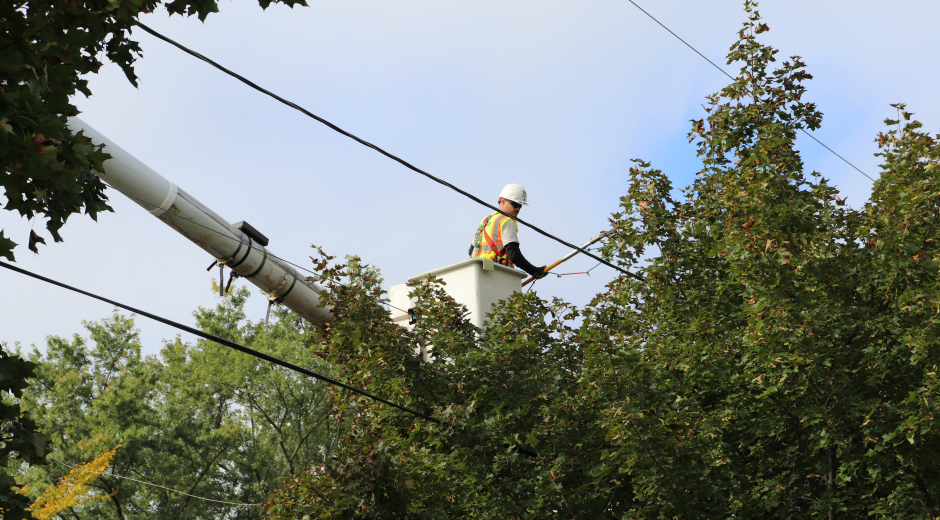
Traditional methods for clearing branches—like manual trimming or mechanical cutting—face multiple challenges. First, manual work is slow, labor-intensive, and dangerous. Workers often operate at great heights, exposing them to severe injury risks. Second, mechanical tools struggle in rough terrain or bad weather and can harm the environment. For instance, heavy machinery might damage nearby vegetation or disturb wildlife habitats. These limitations highlight the need for safer, more efficient solutions.
This is where laser-based systems come into play. By using focused laser beams, these devices can remove branches quickly and precisely without direct contact. This approach minimizes risks to workers, reduces environmental harm, and prevents outages more effectively than older methods.
Advantages of tree trimming with laser obstacle remover
Laser systems address many shortcomings of traditional techniques. 例如, they allow operators to cut branches from a safe distance, eliminating the need for climbing or risky maneuvers. Additionally, lasers work in almost any weather, ensuring consistent performance during storms or extreme temperatures. Most importantly, this technology avoids physical contact with power lines, significantly lowering the chance of short circuits or equipment damage.
Economically, laser systems help utilities save money over time. Faster cleanup reduces grid downtime, while fewer outages mean lower repair costs and less lost revenue. Environmentally, the precision of lasers minimizes collateral damage to surrounding trees and ecosystems. In short, this technology offers a balanced solution that prioritizes safety, efficiency, and sustainability.
Limitations of Existing Clearance Methods
While current approaches like manual trimming or helicopter-assisted cutting have been useful, they face clear drawbacks. Let’s break these down:
Manual Pruning: This method requires large teams working in hazardous conditions. Data shows that injuries during high-voltage line maintenance remain alarmingly common. Even with safety gear, workers face risks from falls, electrical shocks, or falling debris.
Helicopter Operations: Although helicopters cover large areas quickly, they’re expensive to deploy and heavily weather-dependent. Rain, fog, or high winds can ground flights for days, delaying critical maintenance. Helicopters also produce noise pollution and carbon emissions, conflicting with environmental goals.
Environmental Impact: 像电锯或化学处理等传统工具通常会对非目标植物和野生动物造成伤害. 例如, 除草剂可能渗入地下水, 而机械振动会扰乱动物栖息地.
这些挑战凸显了电力行业需要更好解决方案的原因. 激光系统, 凭借其远程操作和高精度, 提供了一个有前景的替代方案.
激光障碍清除系统的设计原则
平衡安全性与效率
在设计激光清障设备时, 工程师关注两个优先事项: 操作安全性和切割速度. 设备必须快速移除如树枝等障碍物,同时保护电网基础设施和操作人员. 为实现这一点, 现代系统包括以下功能::
实时监控摄像头和传感器,用于跟踪激光定位.
如果光束偏离目标会自动启动的关闭机制.
用户友好的界面以简化培训并减少人为错误。例如, 先进的视觉系统让操作员能够远程调整激光路径, 确保精确切割而无需接近带电电线. 通过整合这些安全措施, 该技术在保持高生产率的同时将意外事故降到最低.
提高速度和精度
为了最大化效率, 工程师优化两个关键组件: 激光的功率输出及其聚焦系统. 测试显示,微调这些元素可以将间隙时间减少至 40%. 例如, 升级激光的光学透镜可能允许它在 10 秒内而不是整整一分钟内烧穿一根 30 厘米厚的树枝.
Additionally, 智能软件发挥着关键作用. Image recognition algorithms automatically detect branch size, distance, and density, then calculate the optimal cutting path. Some systems even use AI to “learn” from past operations, steadily improving their accuracy.
Environmental and Sustainability Benefits
Laser systems align closely with modern environmental goals. Unlike older methods, they:
Avoid toxic chemicals (e.g., herbicides).
Produce no physical waste like wood chips or oil leaks.
Use energy efficiently, often drawing power from renewable sources.A practical example: When clearing branches near rivers, lasers prevent chemical runoff that could pollute water supplies. They also spare nearby trees from unnecessary damage, helping preserve local ecosystems.
Wildlife Protection Features
Designers pay special attention to minimizing harm to animals. 例如:
The laser’s 1080nm wavelength reflects harmlessly off bird feathers and insect exoskeletons, causing no burns.
Slow-moving beams give creatures time to flee—unlike sudden mechanical noises that startle them.
Operators can pause work instantly if protected species (e.g., nesting birds) are spotted nearby.
Cost-Effectiveness and Long-Term Value
While another advantage of tree trimming with laser is that they save money over time. Key advantages include:
Reduced labor costs (fewer workers needed).
Lower equipment maintenance (no chainsaw blades to replace).
Fewer outage-related fines or compensation payments.
例如, a utility company might spend $50,000 on a laser unit but save $500,000 annually in manual labor and outage repairs.
结论
Portable laser obstacle clearance systems represent a major leap forward for power grid maintenance. 使用激光修剪树木的优势值得注意. 通过结合安全性, 速度, 和环保措施, 它们解决了传统方法的核心挑战. 随着技术的发展, 这些设备可能会变得更小, 更便宜, 甚至更高效——在保障可靠电力供应的同时保护人类和地球.
图像来自上述网络连接
传统方法可能导致切割失败, 交通拥堵, 高空危险, 以及不便的时间管理.